Future Trends: Will QR Codes be Replaced by NFC Technology?
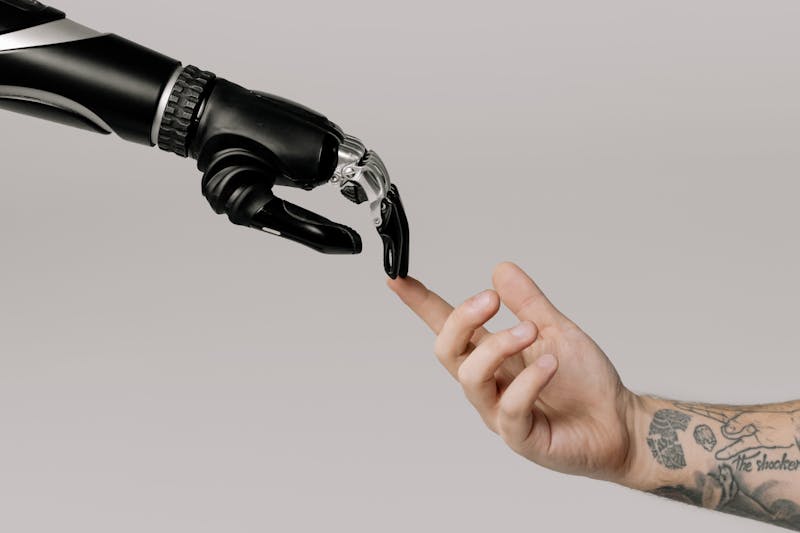
The Tech Horizon: Deciphering the future of contactless data exchange between QR and NFC.
Future Trends: Will QR Codes be Replaced by NFC Technology?
In the rapid digital evolution of 2026, "Contactless" is the most significant keyword in the global economy. As we use our smartphones to pay, connect, and access information, two dominant technologies are battling for the top spot: the QR Code and NFC (Near Field Communication). With the rise of smart cities and IoT (Internet of Things) throughout Asia, many tech analysts are asking a critical question: Is the humble pixelated square destined for retirement? At QR Code Generator Asia, we analyze the shifting trends to determine the winner of the next digital decade.
What is NFC and How Does it Differ from QR?
NFC is a short-range wireless communication technology that allows data exchange between devices over a distance of less than 4cm. It is the tech inside your contactless credit cards and Apple Pay. While a QR code is an "Optical" technology (scanned via a camera), NFC is a "Radio-based" technology (triggered via a chip).
Both serve a similar purpose: linking a physical action to a digital result. However, the costs, scalability, and user behavior involved in these two platforms lead us to different future predictions.
The Battle for Dominance: QR vs. NFC
1. The Cost Efficiency Barrier
This is where the QR code wins decisively. To use NFC, a merchant must buy physical NFC "Tags" or chips, which can cost anywhere from $0.10 to $1.00 each. For a business wanting to place tags on 10,000 product packages, this is a significant expense. In contrast, QR codes are 100% Free to print. They don't require expensive hardware; they just need ink and paper. In 2026, for mass marketing and supply chain logistics, the QR code remains the undisputed king of cost-effectiveness.
2. Accessibility and Cross-Platform Compatibility
Not every smartphone in the Asian market today has a functional NFC reader. High-end flagships do, but thousands of mid-tier and budget phones used across India, Sri Lanka, and Southeast Asia do not. However, every smartphone with a camera can scan a QR code. This universal accessibility ensures that the QR code remains the inclusive choice for digital literacy in emerging economies.
3. The User Journey: Tap vs. Scan
NFC offers a slightly smoother "Tap" experience. You don't need to open your camera; you just tap the phone near the chip. QR codes require the "Scan" motion. While the "Tap" is 1-2 seconds faster, the "Scan" provides Visual Intention. When you scan a code, you know what you're doing. A random NFC chip hidden behind a poster might trigger your phone unexpectedly, leading to privacy and "Ghost-Scanning" concerns that QR codes simply don't have.
Trend Analysis for 2030:
"The future is not 'Either/Or'; it is 'Co-existence.' NFC will dominate high-frequency interactions (like metro tickets and luxury payments), while QR codes will dominate mass-reach marketing (billboards, packaging, and digital menus) for the next decade."
The Emergence of Augmented Reality (AR)
As we move toward the 2030s, the "Optical Scan" is becoming even more powerful. QR codes are becoming the trigger points for AR experiences. By scanning a high-resolution QR on our platform, QR Code Asia, a user could see a 3D avatar popping out of their magazine or "try on" virtual glasses on their mobile screen. NFC technology is less effective at "Anchoring" these visual AR experiences compared to the optical geometry of a QR square.
Security Standards in the New Age
With both technologies, security is the paramount concern for 2026. NFC tags can be overwritten by "NFC Sniffers" if they are not professionally locked. Similarly, QR codes face "Quishing" risks. However, the Static HD QR Code provided by Sandaru Pro Guide remains one of the safest digital utilities because it requires no centralized database that can be hacked. It is a mathematical image that creates a local bridge in your browser, maintaining a high level of privacy that RF-based NFC systems sometimes struggle to match.
Final Verdict: The Future is Scannable
Will QR codes be replaced? The short answer is: No. Not for another decade at least. Their zero-cost barrier, ease of distribution (digital screens can show QR, but not NFC), and universal scan-ability make them irreplaceable. While NFC will take over our high-speed transit and secure contactless payments, the Professional QR Code will remain the ultimate standard for business, education, and marketing throughout the Asian tech corridor.
Lead the Future with QR Pro
Don't use outdated tools for tomorrow's market. Ensure your brand is 2026-ready with our high-definition, professional QR utilities.
Start Generating the Future NowSummary: Staying One Step Ahead
Innovation is about choosing the right tool for the right scale. As we navigate through 2026, Sandaru Pro Guide continues to provide the technical foundation required for millions of professional scans across the Asian continent. Whether you are building a boutique brand or a multi-national logistics network, using our High-Res QR Code Asia technology ensures you remain efficient, scannable, and secure. We believe in the future of the scan, the power of a pixel, and the unlimited potential of the Quick Response technology. As digital horizons broaden, stay anchored with professional tools that grow with you. The future is bright, digital, and most definitely, scannable.
Future-Tech FAQs: QR & NFC
Q: Is it true that newer TVs will use NFC?
A: High-end smart TVs already use NFC for screen mirroring, but QR codes remain the better option for linking viewers to an advertising webpage or contest from a distance (like from a sofa).
Q: Can an NFC chip survive being printed?
A: NFC chips are electronic components; they can be embedded in stickers but not "printed" via ink. QR codes, however, are purely visual and can be printed on any surface, including cloth, metal, or stone.
Q: Should I use NFC and QR together?
A: Yes! This is a "Hybrid Branding" strategy. Putting both options on your business cards ensures that regardless of the user's phone capability, they can connect with you instantly.